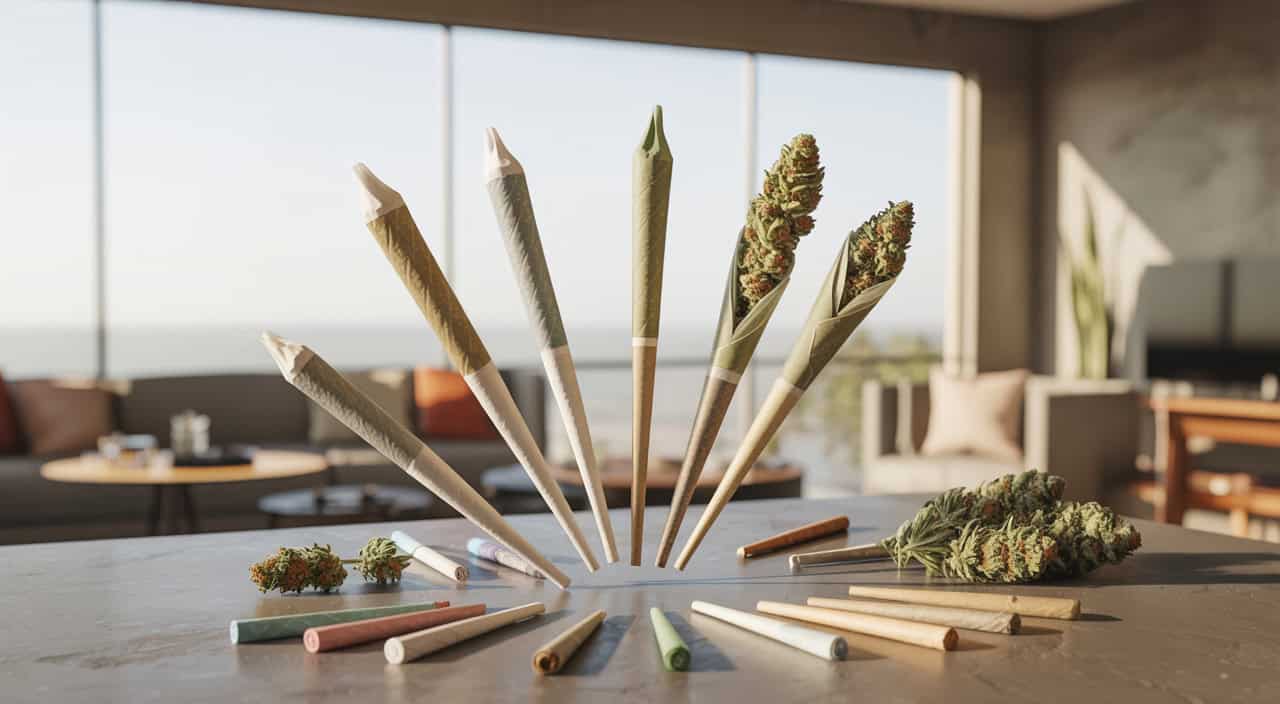
Exploring the best joint types weed fans enjoy helps you find your ideal smoking experience, whether you prefer a classic, slow-burning cone or a unique, potent roll.
Popular Joint Types Weed Fans Roll
What are the common ways people roll their flower today? It’s a great question with many answers. Beyond the simple roll, an entire world of joint types weed enthusiasts use exists, each offering unique burn rates, flavor profiles, and sensations. Grasping these differences can really boost your session. In this text, we’ll look at the basics, investigate some exciting specialty styles, and clear up the differences between joints, blunts, and spliffs.
The Classics: Daily Go-To Joint Styles
Before investigating advanced methods, you should master the basics. The standard cylinder, the cone, and the pinner serve as the foundation of rolling. They stay popular because they are simple, effective, and reliable for daily use.
What is a Classic Joint?
The classic joint is the standard way to consume cannabis: ground flower wrapped in rolling paper. It’s effective. Many people add a small filter, or “crutch,” at the smoking end. Using a crutch is smart because it helps with airflow, keeps the paper from collapsing, and stops flower pieces from getting in your mouth. Its no-fuss design makes it a top choice for any smoker https://en.wikipedia.org/wiki/Joint_(cannabis)).
Why Do People Prefer Cone Joints?
A cone joint features a tapered shape—narrow at the filter and wider at the tip. This shape helps the smoke burn slower and more evenly. Since the wider end fits more flower, cones are the go-to choice for group sessions where sharing is common https://damp-e.com/en/blog/types-of-joints-discover. Their consistent shape also makes them a favorite for pre-rolls found in shops https://budmary.com/types-of-pre-rolls-and-how-to-roll-joints/.
When Should You Roll a Pinner Joint?
Sometimes, less is more. A pinner is a thin, small joint designed to save your stash or for times when you want a light, manageable effect. They are discreet, portable, and perfect for quick, solo sessions during the day when you want to stay active. Because of their size, they are also a great way for beginners to start learning how to roll https://thecannabisplace.org/blog/types-of-weed-joints/.
Specialty Joint Types for Special Occasions
Ready to expand your skills? Specialty joint types weed smokers enjoy focus on aesthetics, potency, and the overall vibe. These aren’t usually for daily use; they are kept for moments when you want something special.
“An expertly rolled joint is more than just a delivery method; it’s the first step of the experience,” notes a long-time industry veteran.
What’s the Deal with the Cross Joint?
The cross joint is a classic piece of rolling art. It is built by piercing a larger joint and inserting a thinner one through it to form a “T” shape. When you light all three ends, the airflow meets, providing a unique and potent experience. While it takes practice to get a smooth draw, the visual flair makes it a star at any gathering https://damp-e.com/en/blog/types-of-joints-discover.
What Is a Twax Joint?
If you want more potency, the twax joint is for you. This is basically a regular joint made stronger by adding cannabis concentrates, such as hash, kief, wax, or oil. You can mix the concentrate with the flower, paint it on the paper, or both. The result is a much stronger effect and a more complex flavor. This style is usually best for experienced smokers with a higher tolerance https://shopharborside.com/infused-pre-rolls-vs-classic-joints-which-should-you-choose/.
How are Sculpted Joints Made?
A tulip joint features a large, bulbous end that looks like a flower. Besides looking cool, this design creates a chamber for smoke to sit, leading to a slower, smoother draw. Other advanced styles include the “inside-out” joint—rolled with the sticky gum line facing out—or “twisted” tips, which offer small changes to the burn rate and flavor of your favorite weed joint types https://www.sortingrobotics.com/the-grind-blog/types-of-weed-joints.
Joints, Blunts, and Spliffs: What’s the Difference?

Even though people use these terms interchangeably, they refer to different ways of smoking. The main difference is the wrapper and if tobacco is added.
How Blunts Differ from Joints
Blunts are wrapped in tobacco leaf or hemp-based cigar wrappers. Because these wraps are thicker than standard rolling papers, blunts burn much slower, making them great for long sessions. The tobacco leaf wrap also adds an earthy flavor and some nicotine, which creates a different chemical feel than a pure cannabis joint https://www.atlrx.com/blogs/cannabis/spliff-vs-joint-vs-blunt-what-is-the-difference/.
What Exactly Is a Spliff?
A spliff is a mix. It combines ground cannabis with loose-leaf tobacco in a standard paper. The ratio of tobacco to cannabis is up to you, which changes the flavor, burn rate, and intensity. In many places, spliffs are the standard way to smoke, whereas pure joints are more popular in other regions https://www.leafly.com/learn/consume/smoke/difference-between-joints-blunts-spliffs.
The Rise of Pre-Rolled Joints
If you want to skip the rolling, the market has many easy pre-rolls. These let you try different joint types weed lovers enjoy without having to roll them yourself. They usually come in three types: standard, infused, and blunts.
What Are Standard Pre-Rolls?
Standard pre-rolls are the easiest option. They are just professionally filled, sealed joints with ground flower, ready to light. They are a fantastic, simple option for beginners or anyone who likes convenience https://www.veriheal.com/blog/cannabis-pre-rolls/.
How Do Infused Pre-Rolls Work?
Infused pre-rolls are the high-performance version of the standard type. By adding concentrates like kief, live resin, or diamonds to the flower, these pre-rolls are much more potent. For experienced users who want a strong experience without rolling a complex joint, these are a premier choice https://shopharborside.com/infused-pre-rolls-vs-classic-joints-which-should-you-choose/.
What Are Blunt Pre-Rolls?
Just like you can buy pre-rolled joints, you can also find pre-rolled blunts. These offer the slow-burning, rich experience of a tobacco or hemp wrap without the hard work of rolling one yourself.
How Your Choices Shape the Smoke
Picking the right roll is only one part. Your experience also depends on the strain and the paper you use.
Does the Strain Matter for Different Weed Joint Types?
The strain is key. Sativa-dominant strains often give energizing effects, making them great for a pinner or a classic joint during a productive day. Indica-dominant strains, known for relaxing, body-focused effects, pair well with a slow-burning cone or large joint for evening relaxation. Hybrids offer a balanced feel that works for almost any situation https://en.wikipedia.org/wiki/Joint_(cannabis)). Furthermore, the experience also depends on the strain, often featuring funny weed strain names.
How Do Rolling Papers Change the Experience?
Papers are made from many materials, including rice, hemp, and flax, with each changing the taste and burn. Rice paper is very thin and burns slow, while hemp paper is a bit thicker and often adds an earthy taste that goes well with the flower. Flavored papers are also an option for those who want to customize their session. Finding the best setup really just comes down to what you like.
References
Damp-e. (n.d.). Discover Different Types of Joints From Triple Tippers to Cross Joints! https://damp-e.com/en/blog/types-of-joints-discover
Wikipedia. (n.d.). Joint (cannabis). https://en.wikipedia.org/wiki/Joint_(cannabis))
Bud and Mary’s. (n.d.). Types of Pre-Rolls and How to Roll Joints. https://budmary.com/types-of-pre-rolls-and-how-to-roll-joints/
The Cannabis Place. (n.d.). Types of Weed Joints (Find One That Suits Your Style Now!). https://thecannabisplace.org/blog/types-of-weed-joints/
Sorting Robotics. (n.d.). The Grind Blog: Types of Weed Joints. https://www.sortingrobotics.com/the-grind-blog/types-of-weed-joints
ATLRx. (n.d.). What’s the difference between joints, blunts, and spliffs?. https://www.atlrx.com/blogs/cannabis/spliff-vs-joint-vs-blunt-what-is-the-difference/
Leafly. (n.d.). What’s the difference between joints, blunts, and spliffs?. https://www.leafly.com/learn/consume/smoke/difference-between-joints-blunts-spliffs
Veriheal. (n.d.). Cannabis Pre-Rolls. https://www.veriheal.com/blog/cannabis-pre-rolls/
Harborside. (n.d.). Infused Pre-Rolls vs. Classic Joints: Which Should You Choose?. https://shopharborside.com/infused-pre-rolls-vs-classic-joints-which-should-you-choose/
— Excerpt —
Explore the different joint types weed users love, from classic rolls and cones to specialty cross joints. Learn how rolling papers and strains shape your experience.